
Solar water pumping for irrigation: how to wipe out your farm's electricity bill
For a farm with electric irrigation, solar pumping is the agricultural investment with the clearest ROI. Zero electricity cost, full autonomy and compatible with your current irrigation setup.
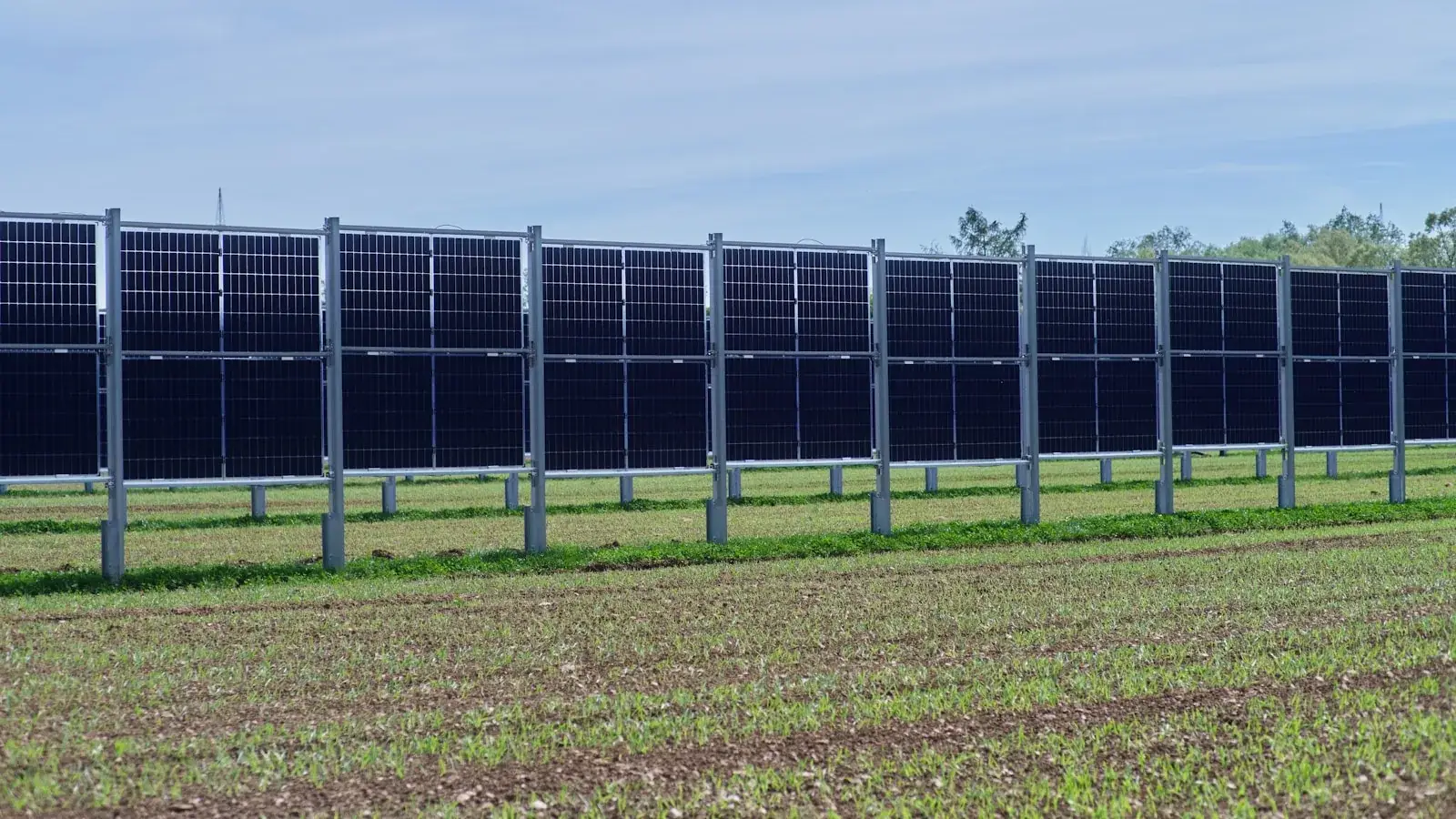
If you have a farm with electric irrigation, you know what it costs. The irrigation pump is, almost without exception, the most expensive electrical line item on the farm. And for many farms in rural areas the problem isn’t only the cost: the grid reaches them poorly, there are frequent cuts and the contracted power runs short in peak season.
Solar pumping is, in this case, the agricultural investment with the most honest and quickest ROI. We break it down without fluff.
Why your pumping bill is so high
Three factors combine:
- High contracted power that you only use during the season. You pay the power term 12 months a year for 3–5 months of real use.
- Time-of-use tariff with peak period that coincides with your best irrigation moment (when the sun is hottest and the plant evaporates the most).
- Distance losses: many farms have the meter 200 meters from the well or the reservoir.
A typical bill for a 7.5–15 kW pump running between March and October sits between €2,500 and €8,000/year depending on hours. If you have several pumps, or a powerful irrigation head, we’re talking five figures a year.
How solar pumping works
The idea is simple: put photovoltaic panels near the well or pump, connect them to a specialised inverter and pump when there’s sun. There are two architectures:
Direct solar pumping (no batteries)
- Panels → special inverter → pump.
- The pump starts when there’s enough sun and modulates frequency according to irradiance.
- No grid, no batteries. Total autonomy.
- For: farms with a storage reservoir that can pump during the day and irrigate when convenient.
Hybrid solar pumping (with grid or genset backup)
- Combines solar + grid (or genset) when more flow is needed or the day is cloudy.
- More expensive, more flexible.
- For: crops without a reservoir, continuous drip irrigation, livestock.
For most farms with a reservoir or intermediate tank, direct solar pumping is the right choice: simpler, cheaper, no battery maintenance.
How much it costs and how much you save
Approximate range for a mid-size pump (5–15 kW useful):
| Component | Estimated cost |
|---|---|
| Photovoltaic panels (10–20 kWp) | €6,000 – €14,000 |
| Solar pumping inverter | €1,500 – €4,000 |
| Mounting structure (ground or over reservoir) | €1,500 – €4,000 |
| Wiring, protections, installation | €2,000 – €5,000 |
| TOTAL turnkey | €11,000 – €27,000 |
Compared with a typical bill of €3,000–8,000/year for the pump, average payback is 3 to 5 years. For intensive farms, 2–3 years.
And from year 4 onward, zero pumping electricity cost for the next 25 years.
The special case: farms with no grid connection
This is where solar pumping isn’t the cheapest option: it’s the only one. Bringing power to an isolated well can cost €20,000–€80,000 in connection alone (depending on distance to the nearest pole and the distributor).
A standalone solar pumping installation, even with a minimal battery bank for grey days, comes in at a fraction of that cost and gives you total independence from the grid.
Compatibility with smart irrigation
Modern solar pumping fits perfectly with:
- Drip irrigation controlled by programmers.
- Soil moisture sensors that activate the pump only when needed.
- Telemetry (mobile control of flow, pressure, reservoir level).
- Electric fencing and other small farm loads with additional batteries.
A modern farm with solar pumping is no less technological than one on the grid. Often more so, because with no consumption bill, automating everything possible doesn’t penalise you.
Specific subsidies for agricultural pumping
⚠️ Changes every year and per autonomous community, consult your advisor.
- PEPAC (CAP Strategic Plan): subsidies for irrigation modernisation, energy efficiency and renewables in farm operations. Typically covers 40–60% of the investment.
- Next Generation EU (component 3): a specific aid line for replacing electric/diesel pumping with solar.
- Regional lines for irrigation modernisation.
- Personal income tax / agricultural regime: the investment is deductible depending on the operation’s tax regime.
The sensible move is to size the project around the subsidy: many lines require prior documentation and a project signed by a certified technician before starting.
Where to start
What you need for an initial assessment:
- Power and operating hours of the current pump (model, kW, hours/year).
- Last electricity bill of the farm (or several if there are multiple meters).
- Satellite photo of where the panels would go (next to the well, over the reservoir, available plot).
With that we put together a preliminary project in a few days. Request your free study and let’s start. For mid-size farms, the accumulated savings over 10 years usually fund several additional investments in the operation itself.