
EVs in 2026: what to check before buying and how to live with one
An honest guide for anyone about to switch to electric: how to pick the battery, what range is realistic, where to charge, what habits protect lifespan and what it really costs per kilometre.
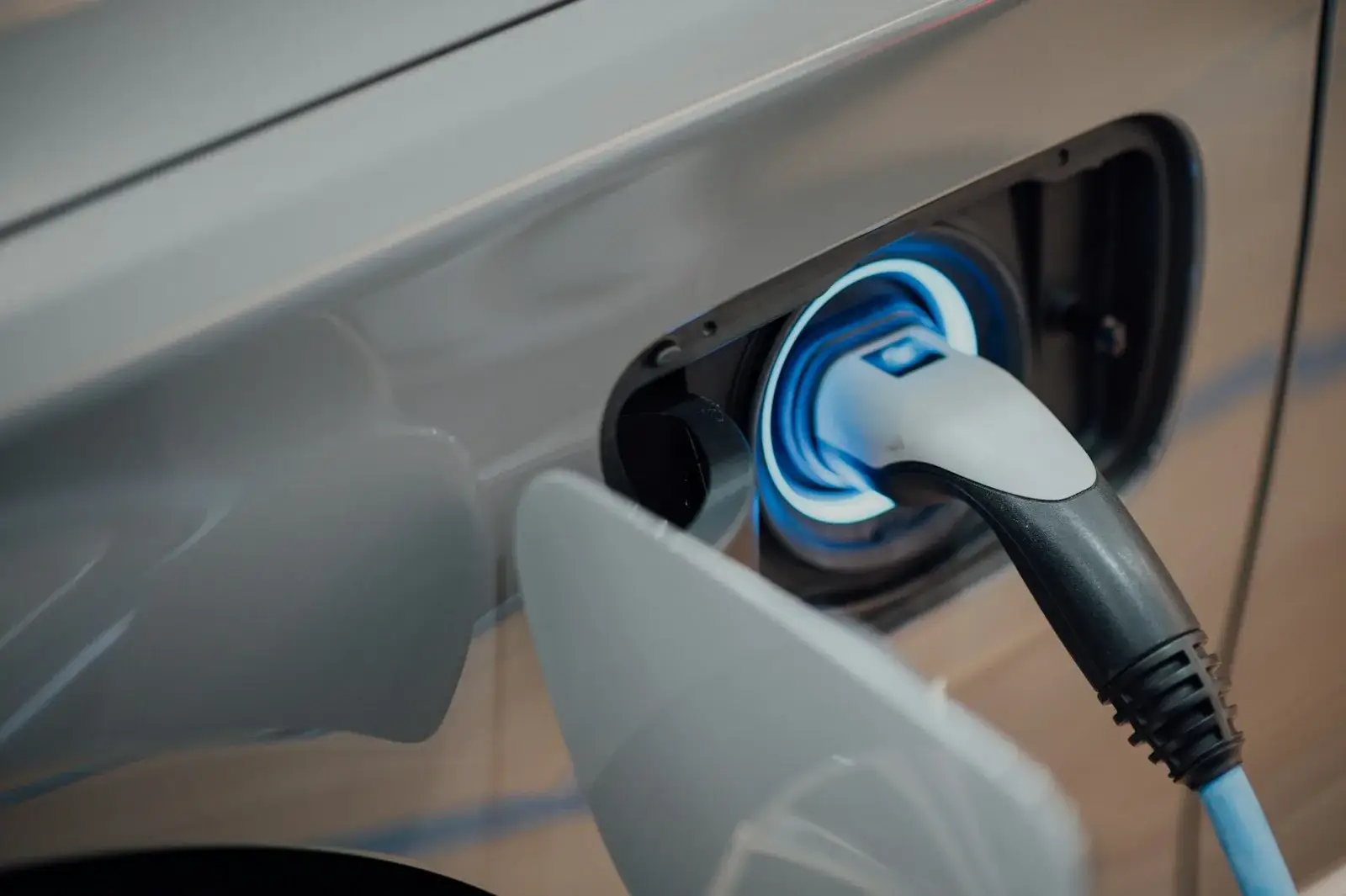
Four out of every ten new cars sold in Europe are now electric or plug-in hybrid, and the figure keeps rising. If you’re thinking about making the switch, this guide saves you a handful of typical mistakes you see in owner forums every week.
Spoiler: an EV isn’t a petrol car with a plug. It’s bought differently, charged differently and driven slightly differently.
Before buying: the four questions that matter
Forget the model for a moment and answer this first:
- How many kilometres do you really do per day? Not what you’d do “in case I drive to Asturias next summer”. Day-to-day. The Spanish average is between 30 and 80 km/day.
- Do you have a garage spot or parking with a power outlet? That changes the whole equation. Without your own charging point, an EV is perfectly viable, but more expensive and less convenient.
- How many long trips do you do per year? Five 600 km trips a year don’t justify buying a car with 600 km of range. Almost never.
- Do you need one car or two charges a week? For many two-car households, the first being electric and the second combustion covers 99 % of cases.
Battery types: LFP vs NMC, seriously
Almost all current EVs use one of these two chemistries:
LFP (lithium-iron-phosphate)
- Safer (far more thermally stable).
- Cheaper and cobalt/nickel-free.
- Tolerates 100 % charges better: in fact, doing so occasionally is recommended to recalibrate the BMS.
- Lower energy density: the car weighs a bit more for the same range.
- Brands and models: base Tesla Model 3, BYD Atto 3, Dolphin, much of Citroën ë-C3, MG4, etc.
NMC (nickel-manganese-cobalt)
- Higher energy density: more range per kilo.
- Don’t charge to 100 % daily: ideal is 80 % daily use, save 100 % for long trips.
- Faster DC charging in general.
- Brands and models: BMW iX, Audi Q4 e-tron, Hyundai Ioniq 5/6, most premium.
Quick conclusion: for city and commuting, LFP is the most durable hassle-free battery. For frequent long trips, NMC pays off.
Range: forget the WLTP
The WLTP (the figure the manufacturer publishes) is a laboratory test. Real range depends on:
- Speed: at 120 km/h you consume 30-40 % more than at 90.
- Cold: below 0 °C you lose 15-25 % of range.
- Extreme heat: above 35 °C with aggressive A/C, ~10 %.
- Load: 4 people and luggage = more consumption, obvious.
Sensible rule: multiply WLTP by 0.75 for realistic mixed-use range. If the car promises 500 km WLTP, count on ~375 km real on the motorway at 120 km/h.
Charging: three options and when to use each
Home charging (3.7 - 22 kW AC)
- The cheapest in the world: kWh between €0.05 (off-peak or solar surplus) and €0.15.
- Recovers 15-40 km per hour of charge depending on the point.
- You arrive with the car at night, it leaves at 7 am at 100 %.
- You need: a certified charging point + community or owned-garage authorisation.
Public slow charging (street, mall parking, 11-22 kW AC)
- Useful for topping up while shopping, dining, working.
- Variable price: €0.30 - €0.55/kWh.
- Don’t block the point when the car is full (courtesy and a fine in some places).
DC fast charging (motorway, 50-350 kW)
- Only for trips. It’s the most stressful on the battery.
- Price: €0.45 - €0.70/kWh depending on operator.
- Don’t use it daily if you want the battery to last 10 years.
Best practices that extend battery life
Four rules worth the cost of many replacement batteries:
- Daily 20-80 %. Keeping the charge always between 20 % and 80 % degrades far less than charging to 100 % or running to 0.
- Only charge to 100 % when you’re about to leave. And use that charge soon, don’t leave it parked at 100 % for days.
- Avoid unnecessary fast charges. If you have a home point, don’t use the petrol station “out of convenience”.
- Don’t leave it empty in the sun for weeks. Parking at 5 % in August is probably the worst possible combination.
And a lesser-known tip: if you park the car for a long time (holidays, trips), leave it between 40 and 60 %, not 100 %.
What it really costs per kilometre
Let’s do honest math for a mid-range EV (mixed consumption ~16 kWh/100 km):
| How you charge | €/kWh | Cost/100 km | Equivalent diesel at 7 L/100 km |
|---|---|---|---|
| Home off-peak | €0.08 | €1.28 | €12/100 km → 9.4× more expensive |
| Home with own PV | €0.03–0.05 | €0.48–0.80 | 15–25× more expensive diesel |
| Public slow charging | €0.40 | €6.40 | still half the diesel cost |
| Motorway fast charging | €0.55 | €8.80 | similar to diesel |
The difference between charging at home with solar and fast-charging on the motorway is an order of magnitude. The big economic advantage of EVs cashes in when you charge at home.
Maintenance: what you save (and what you don’t)
- No oil change, no fuel filters, no timing belt, no clutch.
- Brakes last 2-3 times longer thanks to regenerative braking.
- But: tyres wear faster (heavy car + instant torque). Expect changes every 30-40k km.
- And: MOT is the same, transmission and coolant fluids exist too.
Count on 40-50 % less total maintenance than an equivalent combustion car. Not “near zero”, but less.
The logical step: charge at home with your own energy
If you’re going to buy an EV and you have a house with your own roof (or a community garage spot), the most interesting math isn’t solar or EV: it’s solar + EV.
A well-sized solar installation covers a good part of the car’s consumption at no extra grid cost. And if you do it via leasing, you don’t pay upfront for the solar: the fee comes off the savings generated, including what you stop paying for off-site charging.
If you’re at that exact point (EV in mind, doubts about home charging), request your free study and we’ll show you the numbers for your home, car usage and real bill.