
Is it worth adding a home battery if I already have solar panels? An honest answer
It's not a yes-or-no question. For some households it's the best energy decision of the decade. For others, €6,000 they'll never recover. The criteria that actually matter, with real numbers.
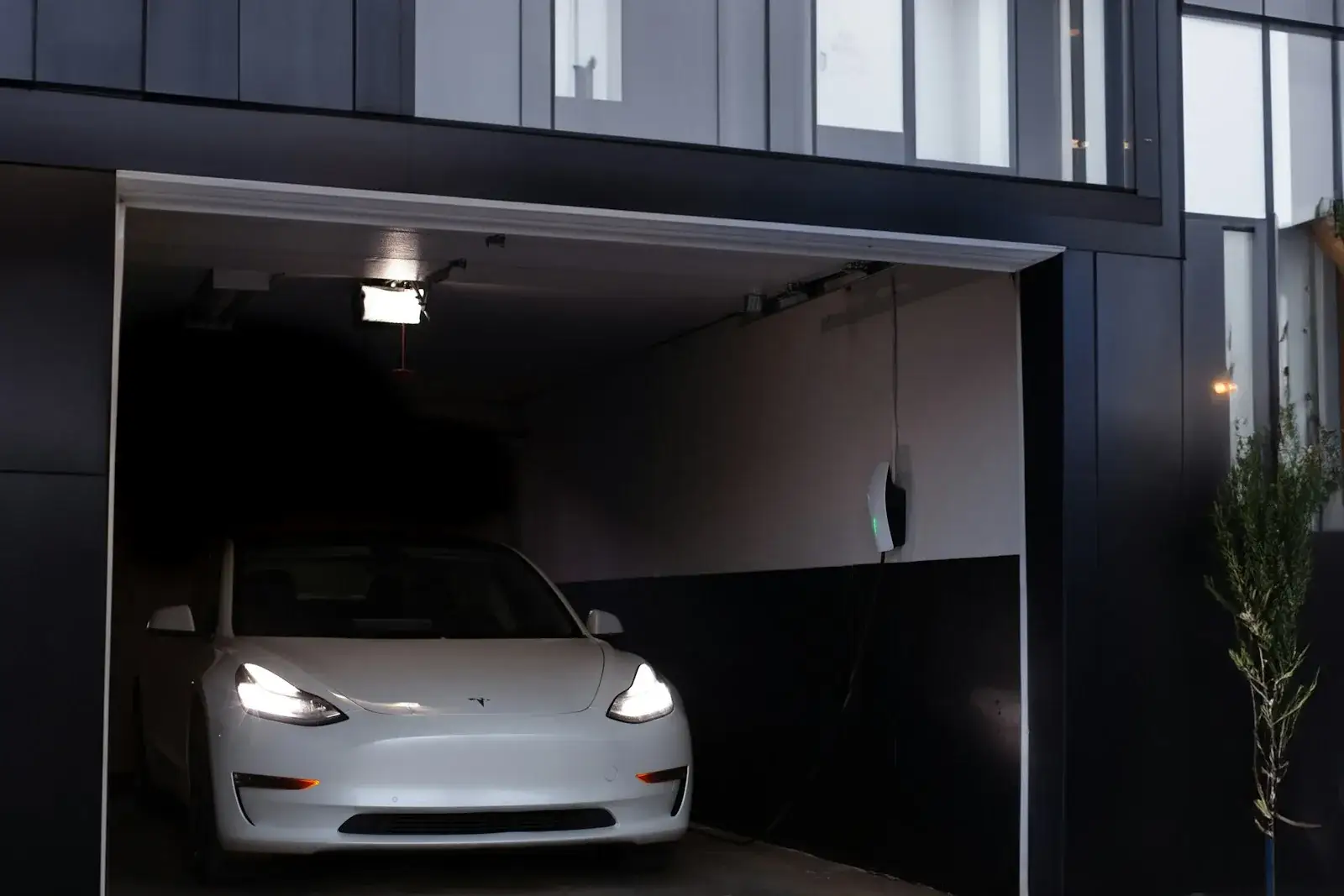
If you already have a working solar installation and someone is now offering you a home battery, this is the question on your mind: “is it really worth it, or am I being sold something?”
Let’s answer without marketing. There are cases where a battery is the best home investment of the decade. And cases where it’s €6,000 thrown away you’ll never recover. The difference comes down to three very specific variables.
What a battery does and DOESN’T do
For the rest of the analysis to make sense, you need to understand what problem a battery solves in a home with panels:
What it DOES
- Stores solar energy that’s left over during the day to use at night or when the sky clouds over.
- Insulates your home from electricity price spikes in peak hours.
- Gives you partial autonomy during a blackout (if the inverter supports it; not all models do).
- Reduces your grid bill: you depend much less on the retailer.
What it DOESN’T do
- Doesn’t give you free electricity forever: they have a useful life (10-15 years, 6,000-10,000 cycles).
- Isn’t necessary for the solar plant to work: your system with surplus compensation is already optimised for “sell the excess to the grid”.
- Doesn’t make you 100 % independent unless you go very large
- have an inverter with island mode.
The three variables that decide if it’s worth it
Variable 1: When do you consume electricity?
This is the main question. If most of your consumption is during sunlight hours, you don’t need a battery. The panels cover you directly.
But if your profile is typical working-household:
- Washer, dishwasher, ironing → night or weekend.
- Cooking and TV → night.
- Heating / AC → evenings and nights.
- EV charging → night.
More than 60 % of your consumption falls outside sunlight. Without a battery, you keep buying that part from the retailer at market price.
A well-sized battery can move you from 30-50 % self-consumption (panels alone) to 70-90 % (panels + battery).
Variable 2: How much do you pay per grid kWh?
The more expensive your electricity, the faster a battery amortises. Simple:
- Flat fixed tariff at €0.15/kWh → the battery is slow to amortise.
- Indexed tariff with peaks at €0.30/kWh → the battery is very profitable.
- Time-of-use tariff, avoiding peak → depends a lot on your routine.
And a factor almost no one counts: the surplus compensation your retailer pays you. If they compensate at €0.08/kWh and you buy at €0.18/kWh, there’s a 10-cent spread the battery lets you capture (because instead of selling them cheap and buying them dear, you store them).
Variable 3: How many blackouts in your area?
If you live in a consolidated city without outages, the battery as continuity insurance doesn’t add as much. If you live in a rural or peri-urban area with recurring outages, the battery gives you something money can’t buy: light when everyone else is in the dark.
Here it’s not a ROI decision but a quality-of-life one.
The honest numbers
A typical home battery (5-15 kWh capacity) costs today between €4,000 and €12,000 installed, depending on brand, capacity and whether you need to replace the inverter.
Let’s compare two real scenarios:
Scenario A: home with daytime consumption
- Annual consumption: 4,000 kWh, 70 % during the day.
- Existing panels: 5 kWp.
- Current self-consumption: 65 %.
- Current monthly cost: ~€40.
- Potential savings with battery: €10-15/month.
- Payback on a €6,000 battery: 35-50 years. Not worth it.
Scenario B: home with nighttime consumption and an EV
- Annual consumption: 8,000 kWh, 70 % at night (includes EV charging).
- Existing panels: 6 kWp.
- Current self-consumption: 30 %.
- Current monthly cost: ~€90.
- Potential savings with a 10 kWh battery: €50-60/month.
- Payback on an €8,000 battery: 12-15 years. Worth it, especially if you value autonomy.
Scenario C: rural with recurring outages
- Annual consumption: 5,000 kWh.
- Outages: 3-5 per year, sometimes lasting several hours.
- Cost of a ruined freezer, reset equipment: variable but high.
- Payback may not be purely economic: it’s a quality-of-life insurance.
Questions to ask yourself before buying
- What percentage of my consumption is outside sunlight hours?
- Do I have or am I planning to have an EV? (Changes the math a lot.)
- How much does my retailer pay me for surpluses? And how much do they charge me for imported kWh?
- Are there recurring outages in my area or am I on a stable grid?
- Does my current inverter support battery expansion or do I need to replace it?
- Do I have adequate space (the battery weighs 100-150 kg and needs ventilation)?
Battery types: LFP vs lithium NMC
Almost all modern home batteries are lithium-iron-phosphate (LFP):
- Safer: thermally stable, practically no thermal risk.
- More cycles: 6,000-10,000 vs 3,000-4,000 for NMC.
- Longer useful life: 15+ years well treated.
- Slightly heavier and pricier per kWh initially, but pay off in longevity.
If someone offers you an NMC battery for home stationary use, ask why.
Size: neither too big nor too small
An oversized battery never fills and doesn’t amortise. An undersized one empties every night and on grey days you fall back on the grid.
Sensible rule: useful capacity should be between 30 % and 60 % of your daily average consumption. For a household using 12 kWh/day, a 5-7 kWh useful battery is typically the sweet spot.
In one sentence
If your consumption is very daytime and you live in an urban area without blackouts, it probably doesn’t pay off. If you consume a lot at night, have an EV or live where the lights go out, the battery can be one of the best home investments you make in years.
Want to see your specific case? Request your free study with your current bill, panel data and consumption pattern. We’ll tell you straight whether it’s worth it or whether you should save the money for something else.