
Industry: why reducing grid dependence is no longer optional
Cuts, micro-cuts, reactive-power spikes and volatile prices. Having your own generation stops being a sustainability matter and becomes one of business continuity.
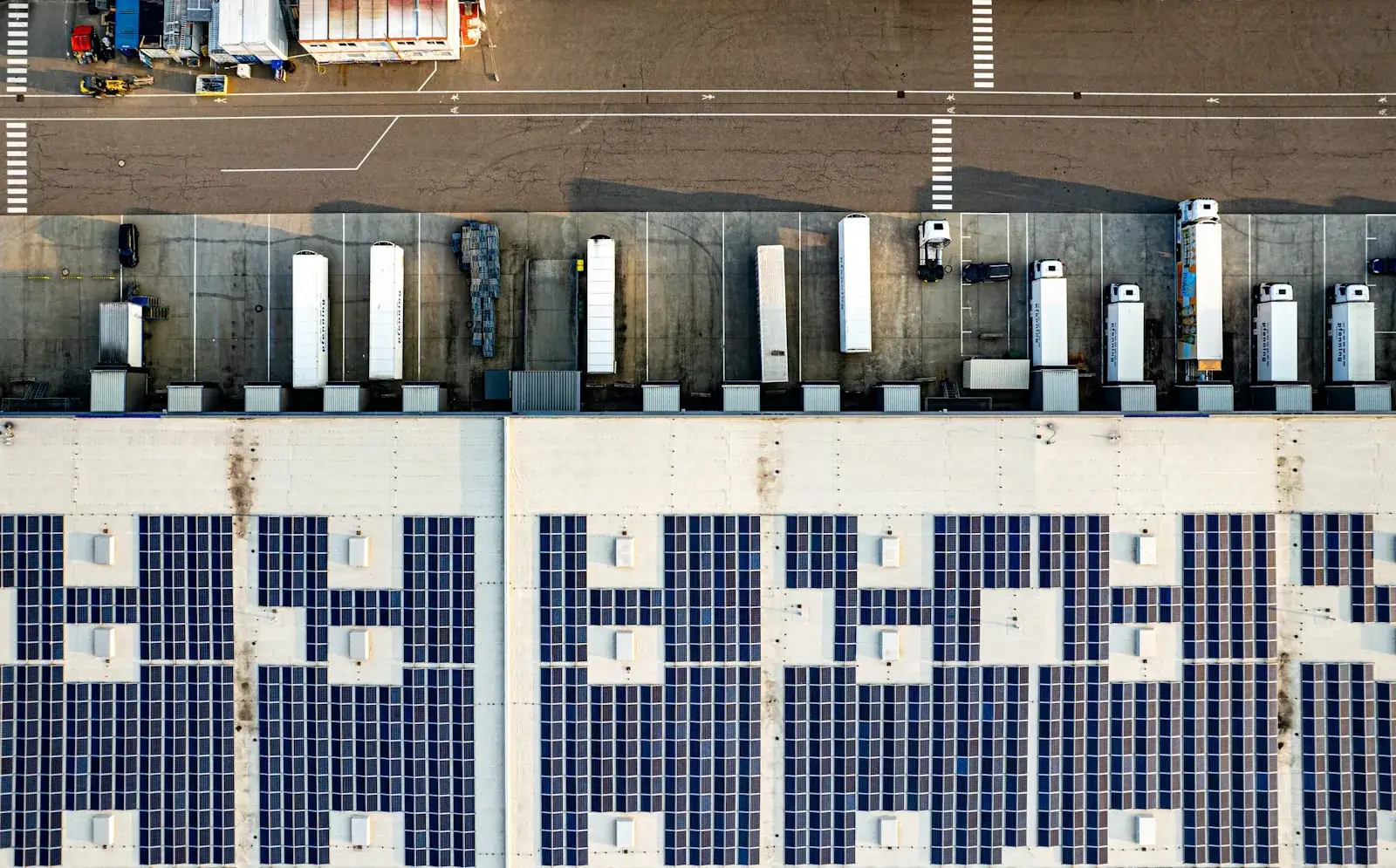
For years, the industrial photovoltaic debate revolved around ROI: how fast it pays back, what share of the bill it recovers, what subsidies are available. All still valid. But the 2025-2026 conversation has shifted, and the word that keeps coming up in operations meetings isn’t savings — it’s continuity.
The European grid isn’t what it used to be
- The blackouts of the last year (Iberia, Central Europe, rail systems) have shown that a very renewable and very interconnected grid is efficient but more sensitive to cascading failures.
- Micro-cuts — those half-second blinks that don’t make the press — interrupt CNC lines, refrigeration and servers every month in a normal warehouse.
- Penalties for reactive energy and contracted-power spikes keep raising the bill quietly.
For a logistics warehouse, an agro-industry or a CNC workshop, a single outage can be worth tens of thousands of euros in spoiled raw material, process resets and rework.
What a well-done industrial solar plant gives you
A 50-500 kWp installation combined with electrical backup is more than just savings:
- Generates during your peak consumption hours (industrial demand matches the solar curve).
- Stabilises your supply: an inverter with grid-support function reduces reactive-power spikes and improves your power factor, which lowers penalties on the bill. And by freeing apparent power (kVA) on your contract, you can expand production — add machinery, lines or critical loads — without needing to increase your contracted power or apply for a new distributor connection.
- Isolates critical loads in case of a cut: even without large batteries, you can keep critical processes running at half power.
- Protects you from market volatility: the kWh you generate doesn’t spike when the pool price does.
The honest numbers
In industry, the typical ROI of photovoltaic leasing is 3 to 5 years (vs 5-8 in residential), because:
- You self-consume 80-95 % of what you generate, with no need to feed back to the grid.
- The leasing fee is 100 % deductible and doesn’t count in CIRBE.
- Integrated with electrical backup (UPS + batteries + optionally a generator) you cover operational risk without investment.
The most common mistake
Thinking industrial photovoltaic as a purchase. Today the sensible move is to separate two decisions:
- The equipment is paid by AUREQIS (leasing with fixed fee over 10/15/20 years).
- Your cash flow stays intact and the fee is offset by the generated savings.
At the end of the contract, the installation becomes your company’s property, fully amortised and without having touched your bank credit lines.
Where to start
All you need for a first serious estimate are three things:
- Electricity bill for the last 12 months (the one with period breakdown).
- Drawing or satellite photo of the roof.
- A rough idea of your production hours.
With that we size the plant, give you the savings and projected fee, and if it fits, we build it. Request your free study and we close it in under 48 business hours.