
Solar panels for hotels and restaurants: how much hospitality really saves in 2026
The sector with the most sun-aligned demand curve and the tightest margins. How much you save, what ROI to expect, and why Booking, Biosphere and the guest already notice.
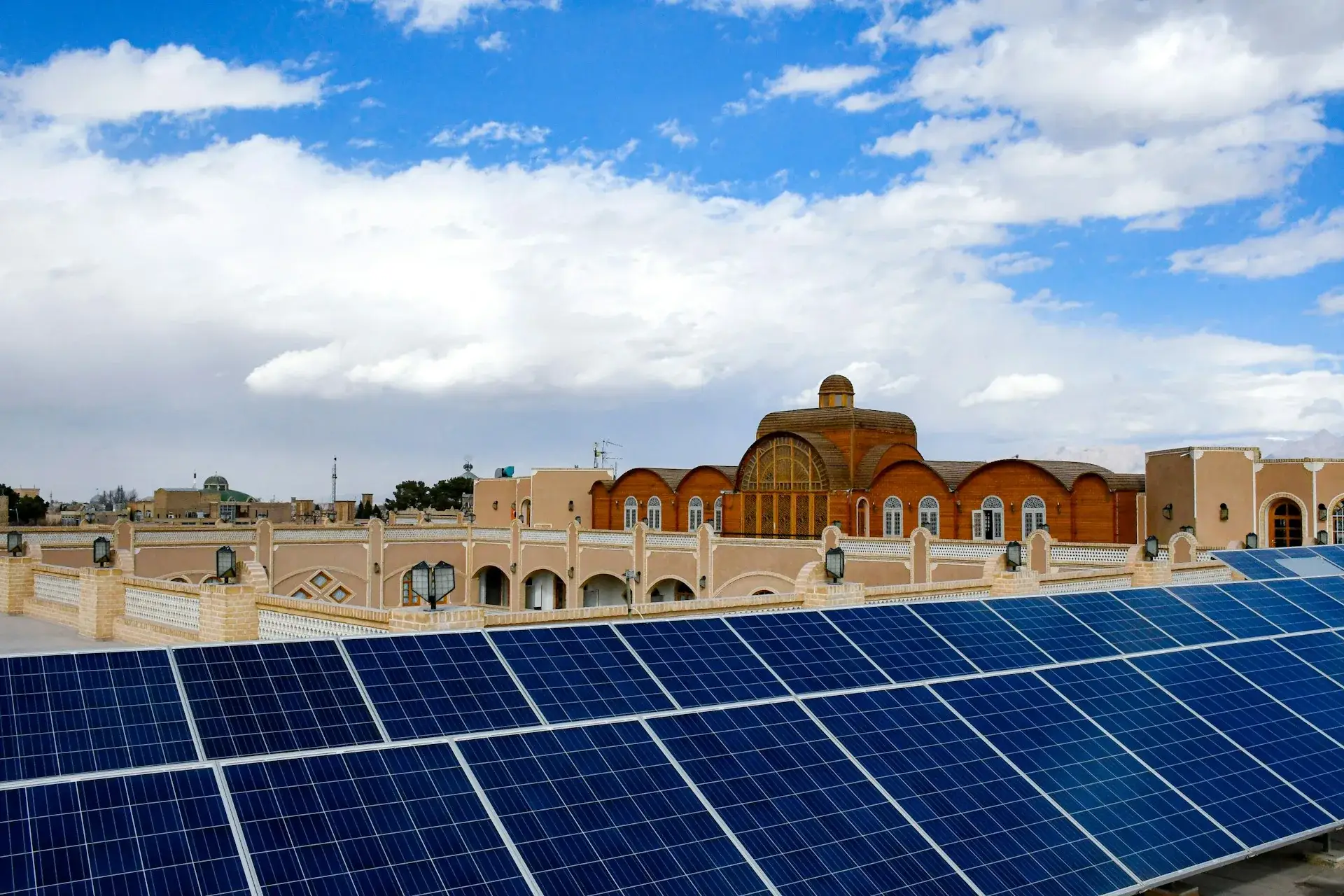
If you run a hotel, restaurant, campsite or rural guesthouse, there’s one question reshaping sector profitability faster than any price increase: how much is your business paying for electricity that your roof could produce on its own?
Hospitality is, by a long margin, the sector with the best photovoltaic fit in the entire Spanish economy. And this isn’t marketing: it’s the convergence of three factors that almost no other sector has at the same time. We break it down with real numbers, without the headline.
Why hospitality is the ideal sector for solar panels
Three reasons, in this order:
1. Your demand curve matches the sun’s curve
A hotel consumes during the day and evening: air conditioning at midday, DHW for morning and afternoon showers, pool pumps, laundry on morning shift, kitchens running at midday and evening. Between 65 % and 80 % of your electricity consumption happens while the sun is out. That means extremely high direct self-consumption, with no need for batteries to make the numbers work.
Compare that with a residential home, where most consumption is at night: a hotel’s photovoltaic saving is twice as efficient per kWp installed.
2. Your electricity bill is between 4 % and 9 % of revenue
In a sector where net margin sits between 8 % and 15 %, halving the electricity bill is like raising prices 3-5 % without touching the menu. But without losing a single guest. In fact, gaining them: we’ll see why in the sustainability section.
3. Your roof or canopy is huge and almost always under-used
Hotels, restaurants with their own parking, campsites and rural guesthouses have roof or pergola surfaces far larger than the business itself needs. That lets you size on the higher end without aesthetic or structural penalty, and leaves room for EV chargers (which will soon be a must).
How much a hotel, restaurant or campsite really consumes
Before talking savings, you need to be clear on volumes. These are typical ranges we see in real studies (peninsular Spain, 2024-2025 data):
| Type | Annual electricity consumption | Typical annual bill |
|---|---|---|
| Urban hotel 50-80 rooms with pool | 350,000 - 700,000 kWh | €70,000 - €140,000 |
| Rural / boutique hotel 15-30 rooms | 80,000 - 180,000 kWh | €18,000 - €40,000 |
| Large coastal hotel 100-200 rooms | 800,000 - 1,800,000 kWh | €160,000 - €360,000 |
| Medium restaurant (80-120 covers) | 60,000 - 130,000 kWh | €13,000 - €28,000 |
| Mid-size campsite / glamping | 120,000 - 350,000 kWh | €25,000 - €70,000 |
| Rural guesthouse / small hostel | 15,000 - 40,000 kWh | €3,500 - €9,000 |
If the restaurant figure surprises you, you’re not alone: many restaurateurs don’t realise that between kitchen, refrigeration, HVAC and extraction hoods, a 100-cover venue uses more electricity than 4 homes. All of it concentrated during hours when the sun is at its strongest.
Where hospitality electricity consumption comes from
Knowing this matters, because it tells you where to attack:
- HVAC (air conditioning, heat pump): 35-50 % of consumption in hotels with pool.
- DHW (domestic hot water): 15-25 %. Higher (up to 30 %) in hotels with many showers and bathtubs.
- Kitchens and commercial refrigeration: 15-25 % in restaurants and hotels with buffet or in-house restaurant.
- Lighting and guest sockets: 10-15 %.
- In-house laundry: 5-15 % (if outsourced, it leaves this bucket but reappears in an external invoice).
- Pool (pump, filtration, heating): 5-12 % in hotels with outdoor pool, up to 20 % with heated indoor pool.
- EV chargers: 0-8 % today, growing every year.
More than 80 % of that consumption can be covered by solar + heat pump when properly sized. That’s why hospitality has the energy fit it has.
How much a hotel can save with solar panels: four real cases
These are indicative numbers based on studies we run regularly. We adjust them to your real bill when we put together the proposal.
Case 1 — Boutique rural hotel, 20 rooms, peninsular inland
- Annual consumption: 110,000 kWh.
- Current bill: €24,000/year.
- Installation: 80 kWp on roof + heat pump for DHW.
- Direct self-consumption: 72 %.
- Surplus offset on bill: 18 %.
- Net annual saving: €18,500 (77 % of the bill).
- Turnkey investment: €65,000-€75,000.
- Payback: 3.5-4 years. Under leasing, positive cash flow from month 1.
Case 2 — Medium restaurant, 100 covers, Mediterranean coast
- Annual consumption: 95,000 kWh.
- Current bill: €21,000/year.
- Installation: 40 kWp on flat roof + DHW accumulator.
- Direct self-consumption: 78 % (kitchens and AC during peak solar hours).
- Net annual saving: €14,500 (69 % of the bill).
- Turnkey investment: €38,000-€45,000.
- Payback: 2.5-3 years.
Case 3 — Coastal hotel, 80 rooms with heated pool
- Annual consumption: 520,000 kWh.
- Current bill: €108,000/year.
- Installation: 250 kWp + 100 kWh battery + heat pump.
- Direct self-consumption: 68 %.
- Surplus offset: 21 %.
- Net annual saving: €81,000 (75 % of the bill).
- Turnkey investment: €310,000-€350,000.
- Payback: 4-4.5 years. With leasing, EBITDA rises €60,000+ from year one.
Case 4 — Campsite with bungalows, Atlantic coast
- Annual consumption: 230,000 kWh (with strong seasonality).
- Current bill: €52,000/year.
- Installation: 120 kWp + battery for reception module + EV chargers.
- Direct self-consumption: 74 %.
- Net annual saving: €38,000 + income from EV chargers paid by guests.
- Payback: 3.5-4 years.
Clear pattern: in hospitality, average payback is 3 to 5 years. Installation lifespan exceeds 25 years. After payback, you get two more decades of nearly free electricity.
The four levers that multiply hospitality savings
Stopping at “let’s install panels” leaves half the value on the table. The best-performing installations combine:
1. Self-consumption photovoltaic
The base layer. Covers 50 % to 80 % of total electricity consumption with realistic sizing.
2. Heat pump for DHW and HVAC
A heat pump is 3 to 4 times more efficient than a gas or oil boiler for producing hot water and heating. Combined with photovoltaic, the energy cost of hotel DHW tends to zero. For a hotel with bathtubs or a heated pool, this pairing is what pushes savings from 50 % up to 80 %.
3. Chargers for guests’ electric vehicles
More and more bookings filter by “has charger at the hotel”. Booking.com includes the filter, Biosphere certifications score it, and the corporate MICE guest demands it. Also:
- You charge with your own solar surplus electricity.
- You bill the guest at a service rate.
- You turn an electricity cost into a service revenue line.
If your hotel has parking, chargers are the most profitable complementary investment available today.
4. Electrical backup so you never lose service
A blackout at dinner peak hour, in August, with 80 guests waiting for a hot shower, isn’t an operational problem: it’s a reputational disaster. A small battery + properly sized genset prevents losing DHW, critical kitchen lines, PMS and chargers. We cover this in depth in the industrial backup post and the genset post.
Hospitality solar ROI and payback vs other sectors
To make the order of magnitude clear:
| Sector | Typical PV payback |
|---|---|
| Hospitality | 3-5 years |
| Agro-industry with irrigation | 3-5 years |
| Industry with daytime consumption | 4-7 years |
| Offices | 6-9 years |
| Residential | 6-10 years |
| Night-time retail | 9-14 years |
Why does hospitality compete with agricultural pumping for the podium? Two reasons: the exact match between solar curve and demand curve, plus the contracted power factor: many hotels over-contract power to cover summer peaks and pay for that 12 months a year. Covering the daytime peak with solar lets you renegotiate contracted power downward.
Leasing vs buying: which fits hospitality best
The hotel sector usually has strong seasonality, high DSO (PMS, platforms paying at 60-90 days) and cash flow under pressure during low season. That’s why leasing fits particularly well:
- €0 upfront investment. The lease payment starts the month after grid connection.
- Lease payment below savings if sized correctly: positive cash flow from day 1.
- 100 % deductible under corporate tax.
- Doesn’t consume CIRBE: your bank lines stay open for refurbishment, expansion or acquiring other assets.
- Maintenance, insurance and after-sales included. Your maintenance manager doesn’t need to learn about inverters.
We cover this in depth in the solar leasing, margin and company valuation post: highly applicable to hotel chains or restaurant groups with multiple sites.
For a small rural hotel or family restaurant with comfortable cash and an available grant, outright purchase may yield a better IRR. We evaluate case by case.
Sustainability the guest pays for: Biosphere, Booking and MICE
Five years ago, “sustainable hotel” meant cost. Today it’s a sales channel. Three data points:
- Booking.com marks “Sustainable Travel” badge for hotels with self-consumption and other measurable actions. Hotels with the badge see up to 15 % higher conversion in their segment.
- Biosphere, Travelife, EarthCheck: certifications carrying growing weight with agencies and operators. Photovoltaic is one of the easiest and cheapest items to comply with.
- MICE corporate guest (conferences, company meetings): more and more companies require ESG criteria from their hotel suppliers. Without a decarbonization track record, you’re out of the shortlist.
Add to this the building’s energy rating: guests looking for rural houses on booking.com or airbnb.com increasingly filter by label. A photovoltaic + heat pump installation typically lifts the building’s energy rating by two letters.
Grants for installing solar in Spanish hospitality
⚠️ Amounts and deadlines change every year and by region. This is indicative. Confirm on your concrete proposal.
- Recovery Plan (Next Generation EU): active lines for self-consumption and energy efficiency in tourism. Typically cover 30-50 % of eligible investment.
- Kit Consulting Programme (digitalisation): applicable if you integrate smart building energy management.
- Regional lines specific to hospitality (Andalusia, Balearic Islands, Canary Islands, Valencian Community have run repeated calls).
- Property tax (IBI) rebate of 25-50 % for 3-5 years in many municipalities. Check with your town hall.
- 50 % tax credit on personal/corporate income tax if the installation upgrades the building’s energy rating by at least one letter.
- 95 % rebate on construction tax (ICIO) in many municipalities.
If sized well, a substantial share of the investment can be recovered via grants + tax deductions in the first fiscal year.
Common mistakes when installing solar in hospitality
These are the five we see most often as second opinions:
1. Sizing by bill without looking at the hourly curve
A hotel with the same annual bill as an industrial site might need double or half the kWp depending on which hours and months hold most of the consumption. Always request a study with the distributor’s 15-min curve (via CUPS), not an estimate.
2. Forgetting DHW and HVAC
DHW and air conditioning are 40-65 % of your thermal-electric consumption. If you only install panels and keep the gas boiler, you save half of what you could. The photovoltaic + heat pump pair is what opens the 70-85 % savings range.
3. Not provisioning EV chargers in the first build
Running conduit and leaving junction boxes during initial works costs €800-€1,500. Doing it two years later, breaking asphalt and digging trenches, costs €5,000-€15,000. If you have a car park, leave at least 2-4 spaces pre-wired even if you don’t electrify them yet.
4. Installing without coordinating with renovation plans
If you have planned works on the roof (waterproofing, expansion, tile replacement on a rural hotel), coordinate solar in the same intervention. You save scaffolding, structural certificates and, in many cases, a new roof partly funded by solar payback.
5. Accepting the first proposal without a leasing scenario
For hospitality with multiple sites, the financial model matters as much as the technical one. Always request two scenarios: purchase and leasing, with 10-year cash flow and EBITDA impact.
How to size and where to start
For us to put together a solid study in under 48 working hours, we need:
- Electricity bills for the last 12 months (or distributor hourly curve — we can pull it ourselves if you give us the CUPS).
- Satellite photo or address of the property.
- Type of activity and seasons (year-round, summer only, weekends only).
- If you have: pool, in-house laundry, gas or electric kitchens, current DHW system.
- If you’re planning: EV chargers, expansion, roof refurbishment.
With that, we send back: optimal kWp, estimated self-consumption, annual savings, leasing payment, purchase scenario and guidance on applicable grants. No commitment. Request your free study.
Frequently asked questions about hospitality photovoltaic
How much do solar panels for a hotel cost?
For a 20-room rural hotel, turnkey investment for a 60-80 kWp installation ranges between €55,000 and €75,000. For large hotels (100+ rooms, pool), 200-300 kWp installations start at €250,000 and scale with equipment (battery, heat pump, chargers).
How much does a restaurant save per month with solar panels?
A 100-cover restaurant with correctly sized installation saves 60-75 % of its electricity bill. In euros, that’s €800-€1,500/month net savings after leasing payment, or €1,100-€1,800/month if the installation is purchased.
Does it work if my hotel closes in low season?
Yes. The installation still produces and surpluses are offset on the bill (under the simplified compensation mechanism in force) or sold at market price (PPA). Seasonality doesn’t break the model: we size kWp so summer covers the bulk of consumption and winter surpluses offset the rest.
Do I need special permits if my hotel is a historic building or in a protected area?
Yes, you need to go through Heritage or Local Commission depending on region. There are specific solutions: panels integrated into the roof with solar tile, frameless black panels, pergolas in inner courtyards. The process adds 2-4 months but is viable in virtually every case we’ve studied.
Is it compatible with a heated pool?
It’s the perfect pairing. A heated pool is one of a hotel’s biggest energy consumers and almost always runs on a heat pump. Covering its consumption with solar yields even better ROI than the hotel average.
Can I bill guests for electricity used to charge their car?
Yes, via a charging point with a billing system (RFID, app or direct payment). You become a charging operator linked to your hotel: the guest pays at the price you set and your solar electricity is monetised directly. We cover this in detail in the EV chargers for company fleet post.
How much does my hotel’s valuation rise with self-consumption?
For hotel groups and chains, the EBITDA × sector multiple effect can be very meaningful. We develop this in the solar leasing, margin and company valuation post with a numerical case applicable to hospitality.
What if my bill isn’t very high? Does it still pay off?
For a small rural guesthouse with a €3,000-€5,000/year bill, payback stretches to 5-7 years (vs 3-5 for mid-size hotels). It’s still a reasonable investment, especially if you pair with a heat pump and energy rating upgrade to raise nightly rates.
Hospitality is, alongside agricultural pumping, the sector with the clearest and most profitable use case for photovoltaic in Spain today. If your business fits any of the types above, the cost of not doing it already exceeds the cost of doing it. And it gets worse every year.
Request your free study and in under 48 working hours we’ll send you the numbers applied to your property.