
The Spanish grid is no longer reliable: what's really happening with Red Eléctrica
Historic blackout, doubled micro-cuts, voltage dips wrecking industrial processes and an operator still in denial about the shift. What your bill doesn't tell you.
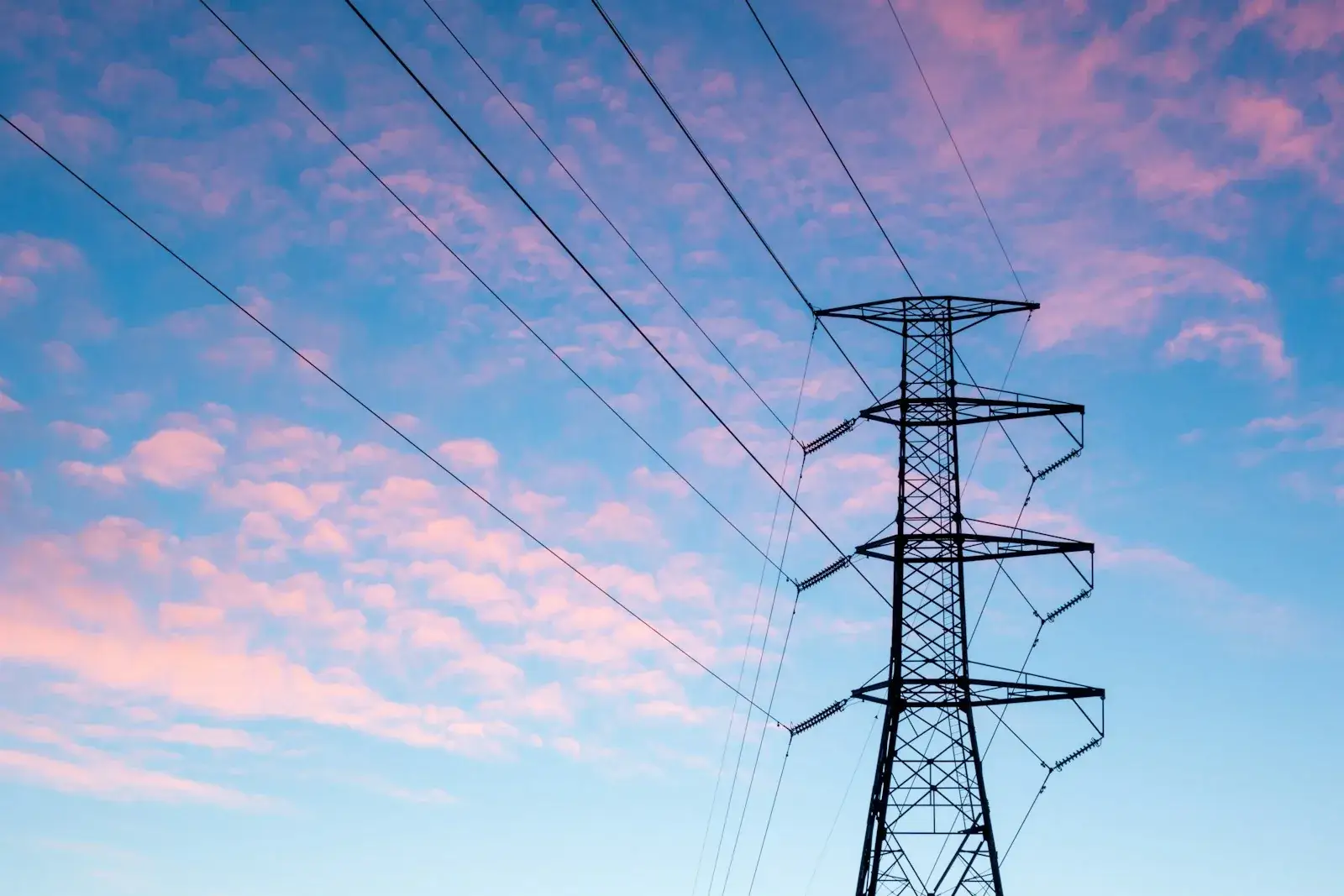
For years we’ve been saying that switching to renewables and self-consumption is good for your wallet and for the planet. That’s still true. But during 2024 and 2025 a third reason has emerged that in many industrial warehouses now outweighs the other two: the Spanish grid has stopped being reliable. And we’re not talking about an opinion. We’re talking about things your bill, your electrical panel and your machinery notice every week.
28 April 2025: a blackout that shouldn’t have happened
At 12:33 on 28 April 2025, the Iberian peninsula went dark. Not a neighbourhood, not a region: Spain, Portugal and part of south-west France. Trains stopped mid-tunnel, hospitals where generators didn’t start on the first try, thousands of businesses with a full day of lost production.
The official explanation came late and in pieces. The short version — the only one that matters to an industrial — is this:
- A power oscillation spread through the European grid without the Spanish system damping it in time.
- The very high penetration of renewables that day (~70 %) was not backed by sufficient mechanical inertia (synchronous power stations off or disconnected).
- When the system tried to stabilise, it fell cascade in under 5 seconds.
What’s serious isn’t that there was a blackout — every country has them. What’s serious is that the operator’s architecture wasn’t ready for a majority-renewable grid, despite years preaching that exact transition. Red Eléctrica sold us they were ready. They weren’t.
What happens every week (and almost no one tells)
The historic blackout was a headline. But industry suffers the problem in small doses and without respite:
Micro-cuts doubled in 18 months
Business associations in the north and centre report in their internal surveys an 80-100 % increase in micro-cuts (drops of less than a second) versus 2023. They’re imperceptible to an office, but they ARE perceptible for:
- CNC lines and welding robots.
- Plastic injection machines (a single blink and you lose the cycle).
- Industrial refrigeration equipment (cold, frozen).
- Servers without a properly sized UPS.
Voltage dips ever more frequent
The voltage dip — that 100-300 millisecond voltage drop that doesn’t shut the warehouse down but does ruin running cycles — is no longer exceptional. It’s the silent damage of the year for most plants with sensitive machinery.
Wave quality and reactive out of range
More and more companies receive warnings of power-factor or reactive penalties, even when the customer hasn’t changed their equipment. The reason: the wave quality the grid delivers has deteriorated, and industrial equipment that previously corrected easily now exceeds limits.
Why it happens: the grid is saturated and badly compensated
The honest technical explanation has three parts that reinforce each other:
- Renewable growth without storage. We’ve added a lot of new solar and wind generation, but very little grid-scale battery or pumped storage. The system swings in and out of surplus every few minutes without damping.
- Closure of nuclears and combined cycles without replacing them. The mechanical inertia that gave system stability has disappeared faster than its electronic replacement (grid-forming inverters, synchronous condensers, grid batteries).
- Obsolete transmission infrastructure. A good chunk of the transmission mesh is over 40 years old. New is built in the same places as old, without the slack a 100 %-renewable grid would demand.
That is: it’s not just “bad luck”. It’s a decade of failed planning.
The operator’s response: the minimum required
Red Eléctrica announced measures after the blackout: spot reinforcements, studies, new grid-forming regulation. The reality: timelines are 5 to 10 years, and meanwhile operational problems keep falling on whoever pays the bill.
If your business depends on the grid delivering stable electricity, you’re not in a position to wait.
The way out (already available)
A reasonable industrial site today shouldn’t depend 100 % on the operator to produce. The three layers that cover the three types of risk are:
- Self-consumption photovoltaic: insulates you from price and, with an inverter with backup function, maintains critical loads during a daytime blackout.
- Batteries: give you hours of margin between the cut and the next solar generation, or an orderly process shutdown.
- Backup (UPS + generator): insurance for long or night blackouts.
You don’t need to do everything at once. But you do need to stop assuming the grid will always be there.
The final cynicism
Whoever pays the most expensive bill of the new Spanish energy paradigm won’t be the utilities. Nor the operator. It’ll be the companies that keep depending on a grid that has become unstable while transforming at forced speed. Investing in autonomy isn’t a green pose: it’s reducing exposure to a concrete regulatory and operational risk.
Want to know what level of autonomy your plant needs? Request your free study. We’ll send you a diagnosis with your bill, your consumption profile and a realistic scenario showing what each layer covers.